Is It Worth It?
Getting traffic is only half the battle. The harder part is turning attention into interest, trust, and action.
That is the problem Brainvertise is trying to address.
Brainvertise is presented as an AI-powered NeuroSales and marketing framework that combines AI, buyer psychology, persuasion, and marketing strategy. Instead of simply asking AI to generate copy, the idea is to first understand what motivates the customer and then build the marketing message around those motivations.
But does the product really deliver something different, or is the “neuro” positioning mainly marketing language?
Here is my honest take.
What Is Brainvertise?
Brainvertise is a marketing training/framework created around three main concepts:
⦁ AI-assisted marketing
⦁ Buyer psychology and NeuroMarketing
⦁ Persuasive communication
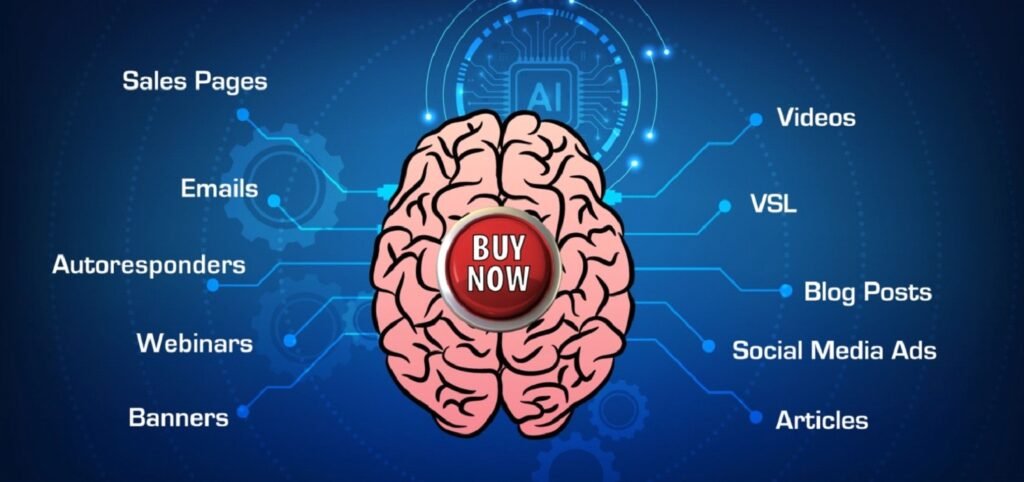
The sales material says it can be applied to sales pages, emails, advertisements, funnels, offers, hooks, angles, and short- and long-form copy.
The basic philosophy makes sense: understand the customer’s problem, desires, emotions, objections, and desired outcome before creating the marketing message.
However, there is an important distinction. Brainvertise is not presented as software that scans people’s brains. There is no independently verified evidence that it performs EEG, fMRI, or similar neurological measurements. The “neuro” terminology is being used within a marketing and persuasion framework.
Who Created Brainvertise?
The official sales page identifies Jo Han Mok as the person behind Brainvertise and describes him as “Chief Provocateur.”
The sales page also displays endorsements and testimonials. These can provide background about the product, but they should not be treated as independent proof that typical users will achieve the same results.
The product’s own marketing material also makes clear that results vary and that examples shown should not be considered typical.
How Does Brainvertise Work?
The basic process can be understood in six stages.
- Understand the prospect
Start with the customer’s situation, problem, desire, fear, and desired result. - Identify motivations
Instead of focusing only on product features, identify why the customer actually wants the solution. - Analyze emotional drivers
Brainvertise places strong emphasis on emotions and psychological factors that can influence purchasing decisions. - Build persuasive messaging
Those insights can then be applied to sales pages, emails, ads, funnels, offers, hooks, and other marketing content. - Use AI
The sales material describes AI-driven prompts for research, ideas, offers, hooks, angles, and copy. - Test the results
This is critical. No psychological framework can guarantee conversions. Different audiences respond differently, so real-world testing still matters.
Brainvertise Features
The most notable features include:
AI-Assisted Marketing
Brainvertise uses AI-driven prompts to assist with research, offer development, hooks, angles, advertisements, emails, funnels, and copy.
The interesting part is that the AI is supposed to be used alongside buyer psychology rather than simply generating generic content.
Buyer Psychology
The framework encourages marketers to think beyond features and ask what the customer actually wants.
For example, “automated task management” is a feature. “I want to stop feeling overwhelmed” is a customer motivation.
That distinction can make marketing messages more relevant.
Emotional Triggers
Brainvertise emphasizes emotional drivers and purchasing motivations. These ideas can be useful in copywriting, but a psychological trigger should never be treated as a guaranteed sales button.
A weak offer, poor targeting, bad traffic, wrong pricing, or lack of trust can still destroy conversions.
Multiple Marketing Applications
The concepts can potentially be used for:
⦁ Sales pages
⦁ Emails
⦁ Advertisements
⦁ Funnels
⦁ Landing pages
⦁ Affiliate promotions
⦁ Offers
⦁ Short-form copy
⦁ Long-form copy
Brainvertise Pricing
The official sales page reviewed for this article displayed a $2.79 promotional price, compared with a $27 reference price.
That is a low entry point, but buyers should remember that the front-end price is not necessarily the total funnel cost. Additional offers are promoted after the main purchase.
Because promotional prices can change, verify the current checkout price before buying.
Brainvertise Upsells
Publicly reported funnel information includes:
⦁ 8 Figure Swipe File — $19.95
⦁ Buddy Bot — $39
⦁ Buyer Blueprints — $97
⦁ Backend Boosters — $49
These prices and contents should be treated as reported promotional information rather than permanent pricing. Verify everything at checkout.
My advice is simple: don’t buy every upsell automatically. Only purchase an upgrade if it solves a specific problem you actually have.
Refund Policy
The official sales page advertises a 60-day personal guarantee for the main offer.
I would still recommend checking the current terms before purchasing, especially if you are considering additional funnel products.
Pros and Cons
Pros
⦁ Different approach to AI marketing
⦁ Strong focus on customer motivations
⦁ Useful across several marketing formats
⦁ Low advertised front-end price
⦁ Potentially useful for marketers and copywriters
Cons
⦁ Sales language can be extremely aggressive
⦁ Strong performance claims are not independently established
⦁ Requires implementation and testing
⦁ Upsells can increase total spending
⦁ Psychology is not a guaranteed conversion formula
Is Brainvertise Legit or a Scam?
Based on the available information, I found no sufficient evidence to call Brainvertise a scam.
It is an identifiable product with a stated creator, sales offer, pricing, training positioning, and advertised refund guarantee.
However, that doesn’t mean every marketing claim has been independently proven.
I could not independently verify claims that Brainvertise produces specific conversion rates, revenue increases, or income levels. The safest way to view it is as a marketing education and persuasion framework, not a guaranteed money-making system.
Who Should Consider Brainvertise?
Brainvertise may be worth considering for:
⦁ Affiliate marketers
⦁ Copywriters
⦁ Digital product sellers
⦁ Coaches and consultants
⦁ Small-business marketers
⦁ Marketers interested in buyer psychology
It may be less suitable for someone who simply wants a basic AI copy generator or a completely automated business.
My Final Verdict
So, is Brainvertise worth it?
Potentially—but only with realistic expectations.
The strongest part of Brainvertise is not the dramatic “brain hacking” language. It is the simple marketing principle underneath it: understand your customer before you create your message.
Combining customer psychology with AI-assisted research and copywriting could give marketers a more thoughtful way to create ads, emails, offers, and sales copy.
Where I remain cautious is the stronger neuroscience language. Neuromarketing is a legitimate research field, but that does not prove that Brainvertise can locate a literal “buy button” in someone’s brain or reliably control subconscious purchasing behavior. That claim could not be independently verified.
At the advertised $2.79 entry price, Brainvertise may be reasonable to investigate if psychology-based marketing interests you.
Just don’t expect guaranteed sales, guaranteed income, or a magic conversion formula.
My recommendation: start with the core product, apply what you learn to a real marketing campaign, measure the results, and only consider additional offers if they provide something you genuinely need.
In short, Brainvertise is more interesting as a buyer-psychology and AI marketing framework than as a magical “neuro” sales machine. That’s the distinction I would keep in mind before buying.